
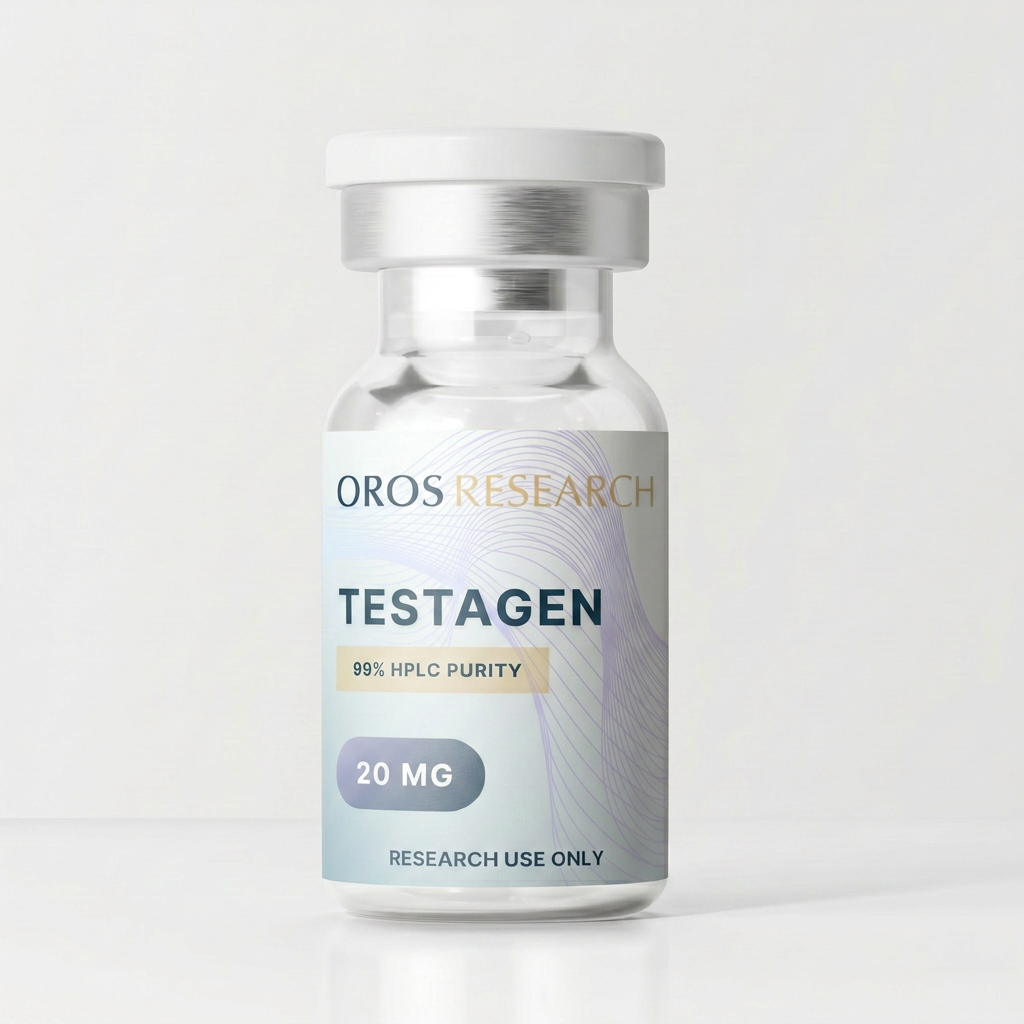

Testagen 20mg
$49.99
- Compound: Testagen 20mg
- Sequence: H-Lys-Glu-Asp-Gly-OH
- Sequence abbreviation: KEDG
- Molecular Formula: C₁₇H₂₉N₅O₉
- Molecular Weight: 447.4 g/mol
- CAS Number: 1026993-38-3
- Vial Size: 3 mL
- Research Classification: Tetrapeptide research material
- Supplied strictly for controlled laboratory and in-vitro research; not intended for human or animal use
Testagen 20mg – Advanced KEDG Peptide for Laboratory Research
Testagen is a short-chain tetrapeptide research material characterized by the amino-acid sequence Lys-Glu-Asp-Gly, commonly abbreviated KEDG. Its compact four-residue structure makes the compound relevant to laboratory investigations involving short peptide characteristics, molecular interactions, cellular experimental models, and comparative peptide research.
OROS Research supplies Testagen 20mg in a 3 mL vial for qualified laboratory investigation. The material provides researchers with a defined KEDG sequence that can be incorporated into appropriately designed analytical and experimental studies.
This product is supplied exclusively for scientific research. References to biological processes or experimental findings involving KEDG should not be interpreted as established therapeutic effects or recommendations for personal use.
Testagen Research Overview
Testagen is characterized by a four-amino-acid sequence consisting of lysine, glutamic acid, aspartic acid, and glycine.
Short peptides such as KEDG provide researchers with relatively compact molecular systems for investigating sequence-dependent properties, peptide interactions, and biological responses under controlled experimental conditions.
Researchers may consult the supplied PubChem compound record alongside the broader PubChem chemical database when evaluating available chemical and substance information.
Published scientific literature involving peptides, cellular models, and related biological research can also be explored through the PubMed biomedical literature database.
The interpretation of published findings should always account for the exact peptide studied, experimental model, concentration, methodology, and endpoints evaluated.
Testagen Peptide and KEDG Research
The Testagen peptide belongs to the category of short-chain peptide research materials. Its KEDG sequence consists of four defined amino-acid residues, making sequence composition an important feature for laboratory characterization.
Short peptides are investigated across a variety of experimental settings. Depending on the research question, investigators may examine molecular interactions, cellular responses, structure-function relationships, stability, or differences between closely related peptide sequences.
KEDG should therefore be considered according to its own chemical identity and experimental context. Results involving another peptide—even one differing by only a single amino-acid residue—should not automatically be attributed to this compound.
This distinction is particularly important when comparing KEDG with shorter peptides such as KED or with longer regulatory peptide sequences.
Laboratory Research Applications
Potential controlled research areas involving KEDG include:
- Short peptide characterization
- Peptide sequence analysis
- Structure-function investigations
- Cellular experimental models
- Molecular interaction research
- Comparative peptide studies
- Analytical chemistry investigations
- Peptide stability studies
- Experimental short-chain peptide research
Researchers comparing distinct peptide materials may also examine AHK-Cu 100mg as a separate research compound.
Another available material is AOD-9604 5mg, which represents a different peptide sequence and experimental research context.
Researchers investigating additional peptide systems can separately evaluate ARA-290 (Buffered) 32mg.
These compounds are not equivalents or substitutes for KEDG. Each should be evaluated according to its individual molecular characteristics and the requirements of the applicable laboratory protocol.
Testagen Peptide Benefits in Research
The phrase testagen peptide benefits should be interpreted within a scientific research context rather than as a claim of benefits for human use.
For researchers, an important characteristic of KEDG is its defined four-amino-acid composition. This allows the peptide to be evaluated in controlled experiments examining how short amino-acid sequences behave within specific analytical, molecular, or cellular models.
Researchers may also compare KEDG with structurally different short peptides to investigate whether sequence length or amino-acid composition influences observed experimental responses.
Any reported biological findings involving KEDG must be interpreted within the conditions of the original study. Experimental observations do not establish that this OROS Research product provides therapeutic, performance, reproductive, endocrine, or other personal benefits.
Product Specifications
| Specification | Product Information |
|---|---|
| Product Name | Testagen 20mg |
| Compound | Testagen |
| Quantity | 20 mg |
| Sequence | H-Lys-Glu-Asp-Gly-OH |
| Sequence Abbreviation | KEDG |
| Peptide Length | 4 amino acids |
| Molecular Formula | C₁₇H₂₉N₅O₉ |
| Molecular Weight | 447.4 g/mol |
| CAS Number | 1026993-38-3 |
| PubChem CID Supplied | 44568787 |
| Vial Size | 3 mL |
| Research Classification | Tetrapeptide research material |
| Intended Use | Laboratory and in-vitro research only |
KEDG and Comparative Peptide Research
A useful aspect of short-peptide research is the ability to compare defined amino-acid sequences.
KEDG contains lysine, glutamic acid, aspartic acid, and glycine. The addition, removal, or substitution of an amino-acid residue can alter a peptide’s chemical characteristics and potentially influence its behavior within a given experimental system.
Researchers should therefore avoid assuming that findings involving KEDG apply to KED or other structurally related peptides.
This sequence-specific approach provides a more controlled framework for comparative laboratory research and helps distinguish observations associated with individual peptide structures.
Testagen FAQ
What is Testagen?
Testagen is a short-chain tetrapeptide research material characterized by the sequence Lys-Glu-Asp-Gly, abbreviated KEDG. This OROS Research product contains 20 mg and is supplied in a 3 mL vial for controlled laboratory and in-vitro investigation.
What is the Testagen peptide sequence?
The supplied sequence is H-Lys-Glu-Asp-Gly-OH. It consists of four amino acids: lysine, glutamic acid, aspartic acid, and glycine. The sequence can be represented using the one-letter abbreviation KEDG.
What are Testagen peptide benefits for laboratory research?
From a research perspective, the defined KEDG sequence provides a compact peptide system for experimental work involving short peptide characterization, molecular interactions, structure-function relationships, cellular models, and comparative peptide studies. This does not imply health or therapeutic benefits.
What is the molecular formula of KEDG?
The supplied molecular formula is C₁₇H₂₉N₅O₉, and the supplied molecular weight is 447.4 g/mol. The product specifications also identify CAS number 1026993-38-3.
How much material does OROS Research supply?
The product contains 20 mg of research material in a 3 mL vial. It is supplied strictly for qualified scientific investigation rather than consumer or personal applications.
Is “testogen healthed academy” related to this product?
No relationship is established by the product information supplied here. The keyword testogen healthed academy uses different terminology and should not be confused with this OROS Research KEDG peptide material. This page specifically concerns the Testagen 20mg research compound.
Is this product intended for human use?
No. The material is supplied exclusively for laboratory and in-vitro research. It is not intended for human or animal consumption, administration, therapeutic application, diagnosis, self-experimentation, bodybuilding, or veterinary use.
Research Use Disclaimer
This KEDG research material is supplied exclusively for controlled laboratory investigation, analytical evaluation, and in-vitro experimentation. It is not intended for human or animal consumption, clinical application, therapeutic use, diagnosis, self-administration, or veterinary use. Experimental work should be performed by qualified research personnel using appropriately validated laboratory procedures.
Related products







Reviews
There are no reviews yet.