
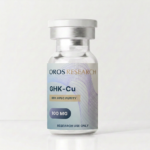
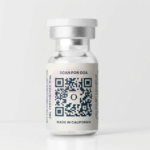
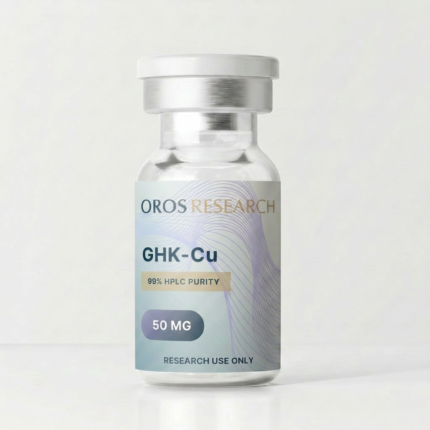
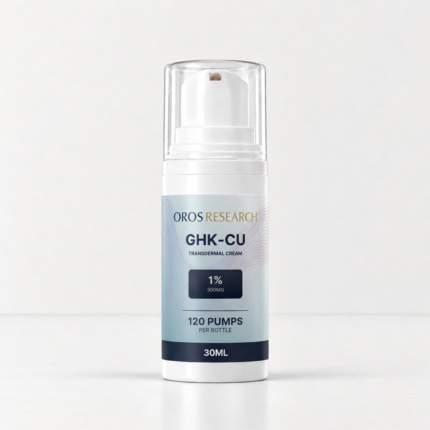
GHK‐Cu 100mg
$69.99
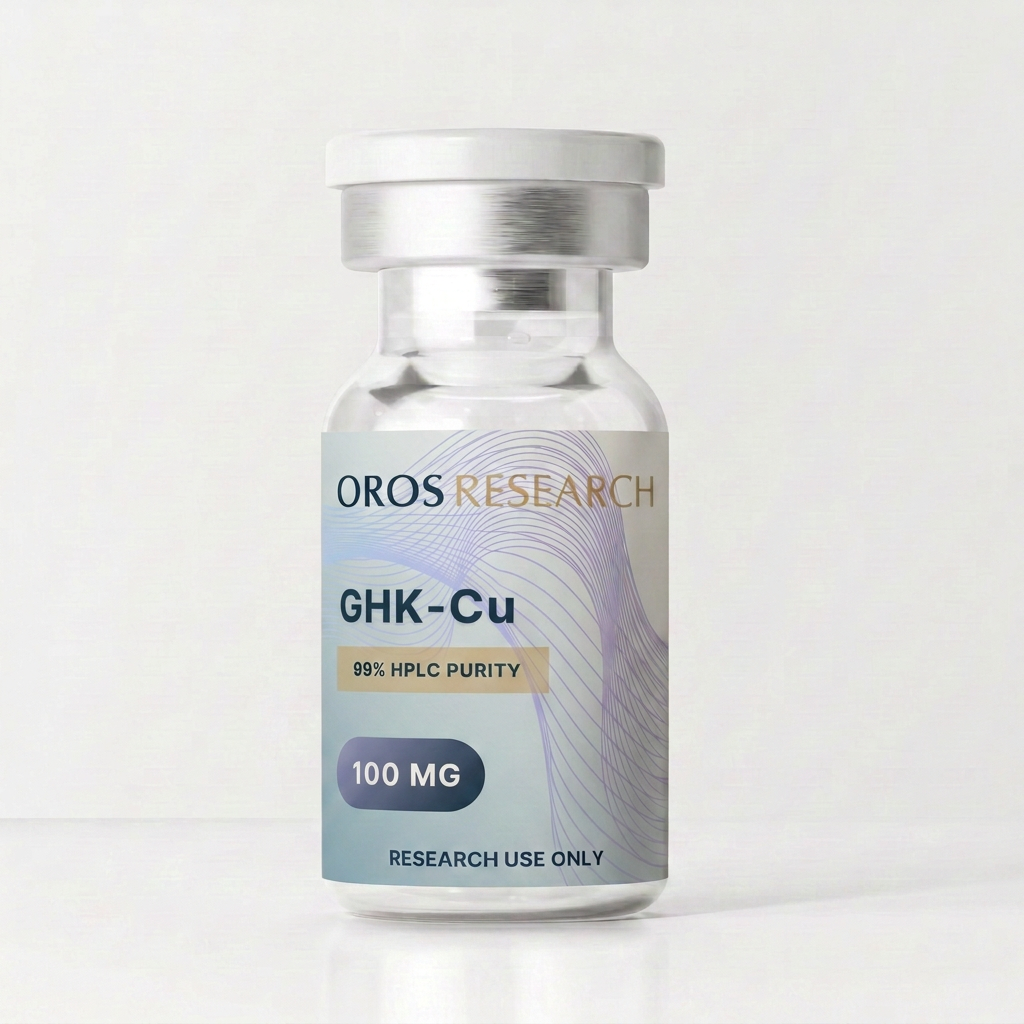
- Compound: GHK-Cu 100mg
- Sequence: Gly-His-Lys
- Molecular Formula: C14H23CuN6O4
- Molecular Weight: 340.384 g/mol
- PubChem CID: 73587
- CAS Number: 89030-95-5
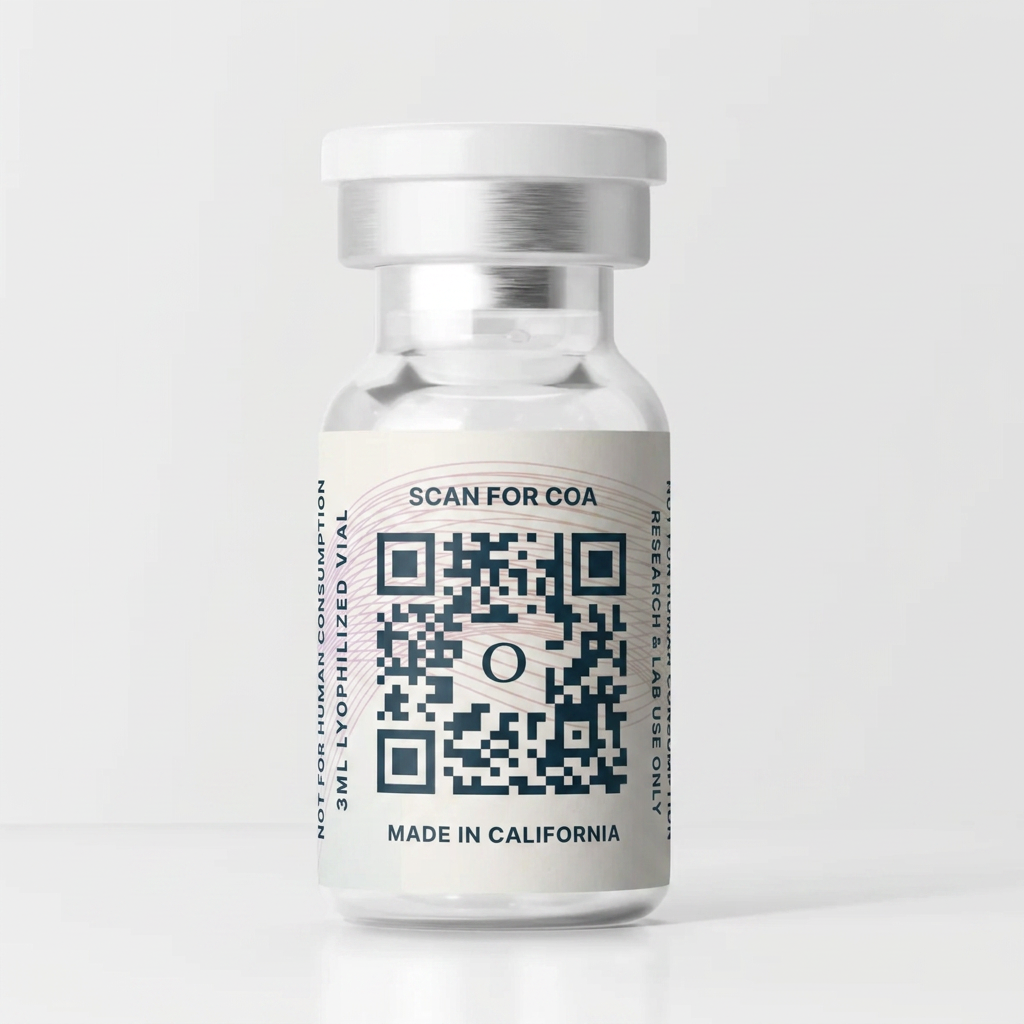
- Vial Size: 3mL
- Intended Use: Controlled laboratory research only
50 in stock
GHKCu 100mg – Advanced GHK-Cu Research Peptide
GHKCu 100mg is a research material supplied in a 3mL vial with the sequence Gly-His-Lys. The supplied molecular formula is C14H23CuN6O4, with a molecular weight of 340.384 g/mol, PubChem CID 73587, and CAS number 89030-95-5.
These specifications provide researchers with molecular reference information for product identification, laboratory documentation, and comparison with appropriately matched scientific resources.
GHKCu 100mg Research Overview
The supplied GHKCu material is characterized by the following specifications:
| Specification | Product Information |
|---|---|
| Compound | GHK-Cu |
| Quantity | 100mg |
| Sequence | Gly-His-Lys |
| Molecular Formula | C14H23CuN6O4 |
| Molecular Weight | 340.384 g/mol |
| PubChem CID | 73587 |
| CAS Number | 89030-95-5 |
| Vial Size | 3mL |
The 100mg quantity describes the supplied amount of research material. The 3mL specification describes vial capacity and should not be interpreted as establishing an experimental concentration or administration volume.
GHK-Cu Molecular Specifications
The supplied sequence is:
Gly-His-Lys
The molecular formula is C14H23CuN6O4, while the supplied molecular weight is 340.384 g/mol.
Additional identifiers include:
PubChem CID: 73587
CAS Number: 89030-95-5
Researchers can examine the supplied formula through the PubChem GHK-Cu molecular formula search.
Using molecular identifiers alongside the compound name can improve precision when comparing research materials with scientific databases and published literature.
GHKCu Molecular Identification
Accurate identification of GHKCu is important when reviewing scientific information.
Product names and keyword variations alone are not sufficient for establishing molecular identity. Researchers should consider the supplied sequence, molecular formula, molecular weight, PubChem identifier, and CAS number together.
For this material, the relevant supplied characteristics are:
- Gly-His-Lys sequence
- C14H23CuN6O4 molecular formula
- 340.384 g/mol molecular weight
- PubChem CID 73587
- CAS 89030-95-5
These characteristics can be recorded alongside experimental information to support clear laboratory documentation.
GHK-Cu 100mg Research Material
The product contains 100mg of GHK-Cu in a 3mL vial.
Researchers should distinguish the amount supplied in the vial from the concentration used within a particular experimental model.
The supplied product information does not specify an experimental concentration, preparation protocol, or research exposure level. Those parameters should therefore be determined according to independently established laboratory methodology rather than inferred from vial capacity.
This distinction is especially important when comparing studies that may use different concentrations, research models, or analytical methods.
GHKCu and Scientific Literature
When investigating GHKCu through scientific databases, researchers should verify that the material described in a publication corresponds with the molecular characteristics relevant to their work.
Useful points of comparison include:
- Compound identity
- Sequence
- Molecular formula
- Molecular weight
- Research model
- Experimental concentration
- Exposure conditions
- Analytical methodology
- Controls
- Experimental endpoints
A publication involving a different material, formulation, or experimental setting should not automatically be treated as directly applicable to this product.
3mL Research Vial Format
The supplied vial capacity is 3mL.
Vial capacity is useful for product identification, inventory management, and laboratory documentation, but it does not independently establish experimental concentration.
The product contains 100mg of specified research material, while the appropriate experimental conditions depend on the research design.
No preparation solvent, reconstitution procedure, or concentration instruction was supplied for this product, so none is being inferred here.
Laboratory Research Considerations
Controlled investigation involving GHKCu 100mg should use clearly defined methodology and appropriate experimental controls.
Relevant considerations can include:
- Verification of compound identity
- Experimental concentration
- Research model selection
- Sample preparation
- Appropriate controls
- Exposure conditions
- Analytical methodology
- Experimental endpoints
- Reproducibility
- Data interpretation
Researchers should document the conditions under which observations are generated rather than extrapolating results beyond the experimental model.
Research Documentation
Good laboratory records can help distinguish experiments involving different materials, quantities, and research conditions.
Documentation for this GHK-Cu material may include:
- Product name
- Quantity supplied
- Sequence
- Molecular formula
- Molecular weight
- PubChem CID
- CAS number
- Vial capacity
- Experimental concentration
- Research model
- Controls
- Analytical method
- Experimental endpoints
This information provides a clearer basis for reproducibility and comparison across experiments.
GHKCu Versus Topical GHK-Cu Formats
This GHKCu product is supplied as 100mg of research material in a 3mL vial.
It should not automatically be treated as equivalent to a GHK-Cu topical formulation. Topical products may contain different concentrations, formats, and additional ingredients.
For that reason, topical search terminology should not be used to redefine the specifications of this 100mg vial.
Researchers should compare products according to their actual supplied composition and format rather than assuming that different catalog formulations are interchangeable.
Related OROS Research Materials
Researchers exploring additional catalog materials can review Tesamorelin 16mg / Ipamorelin 4mg as a separately specified research blend.
Another research option is Tesamorelin 5mg.
Researchers can also explore Testagen 20mg as another independently specified material in the OROS Research catalog.
Each product should be evaluated according to its own supplied composition and molecular characteristics.
Scientific Research Resources
Researchers can use PubChem to investigate available molecular records, chemical identifiers, and compound information.
Peer-reviewed biomedical and experimental literature can be searched through PubMed.
When reviewing publications, researchers should verify the exact material, research model, experimental conditions, methodology, controls, and endpoints before comparing findings with another laboratory experiment.
GHKCu 100mg Research FAQ
What is GHKCu 100mg?
It is a GHK-Cu research material supplied at 100mg in a 3mL vial with the sequence Gly-His-Lys.
What is the GHK-Cu sequence?
The supplied sequence is Gly-His-Lys.
What is the molecular formula?
The supplied molecular formula is C14H23CuN6O4.
What is the molecular weight?
The supplied molecular weight is 340.384 g/mol.
What is the PubChem CID?
The supplied PubChem CID is 73587.
What is the CAS number?
The supplied CAS number is 89030-95-5.
What size vial is supplied?
The material is supplied in a 3mL vial.
Is this the same as a GHK-Cu topical product?
No. The supplied specifications describe 100mg of research material in a 3mL vial. A topical formulation can have different concentrations, ingredients, and physical characteristics.
Research Use Disclaimer
This GHKCu material is supplied exclusively for controlled laboratory investigation, analytical evaluation, and applicable in-vitro research. It is not intended for human or animal consumption, injection, therapeutic application, diagnosis, clinical use, self-administration, cosmetic treatment, bodybuilding, performance enhancement, or veterinary application. Experimental work should be performed by qualified personnel using appropriately validated laboratory procedures.
| Net Weight |
100mg |
|---|---|
| Brand |
OROS Research |
| Format |
Lyophilized Vial |
Related products




Reviews
There are no reviews yet.