
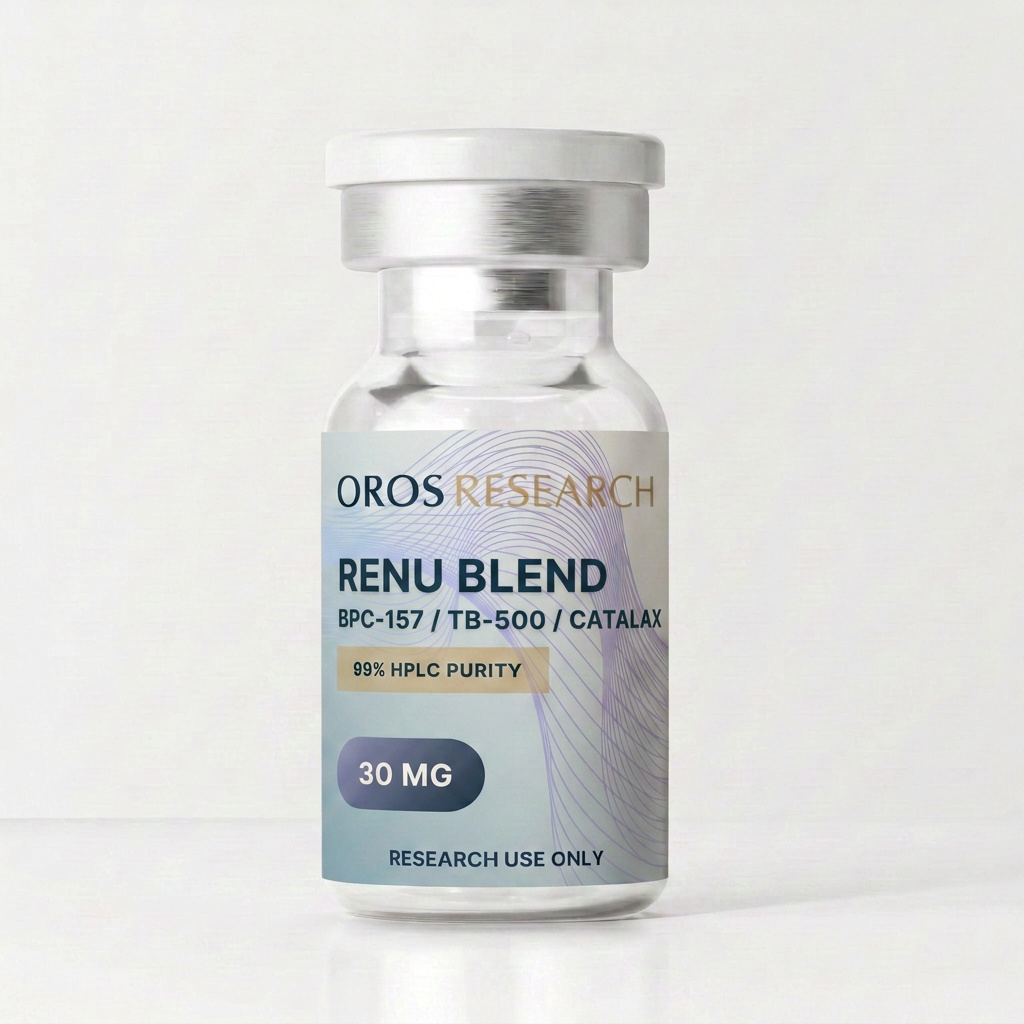
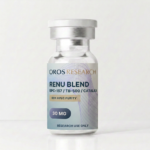
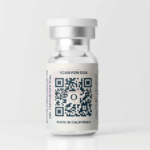
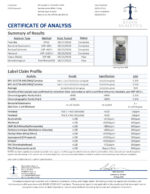
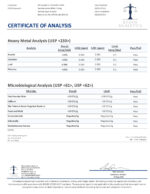
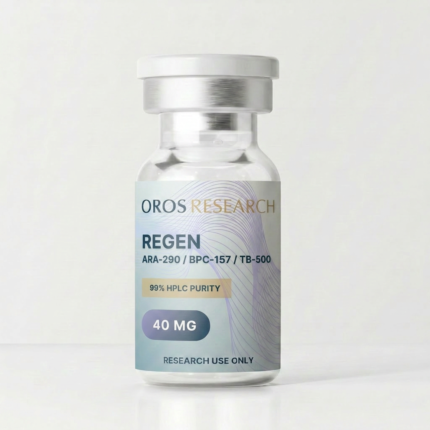
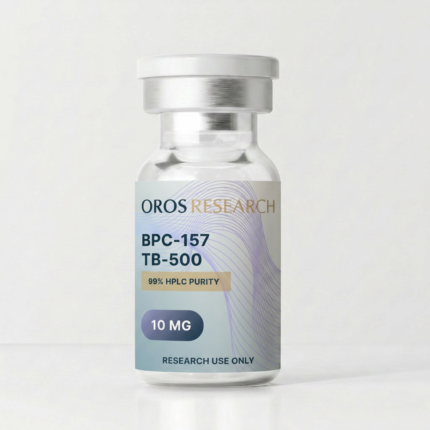
RENU – BPC-157 10mg, Cartalax 10mg, TB-500 (TB4) 10mg (30mg Blend)
$119.99
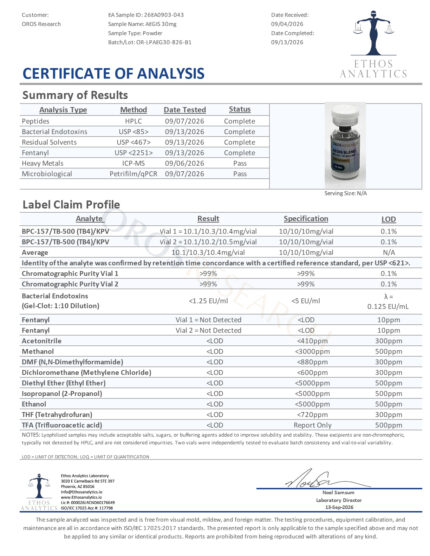
- BPC-157: 10mg
- Cartalax: 10mg
- TB-500 (Thymosin Beta-4): 10mg
- Total Material: 30mg
- Vial Size: 3mL
- Three-component research formulation
- Documented molecular specifications for each component
- Intended Use: Controlled laboratory research only
50 in stock
RENU – BPC-157 10mg / Cartalax 10mg / TB-500 10mg – Advanced 30mg Research Blend
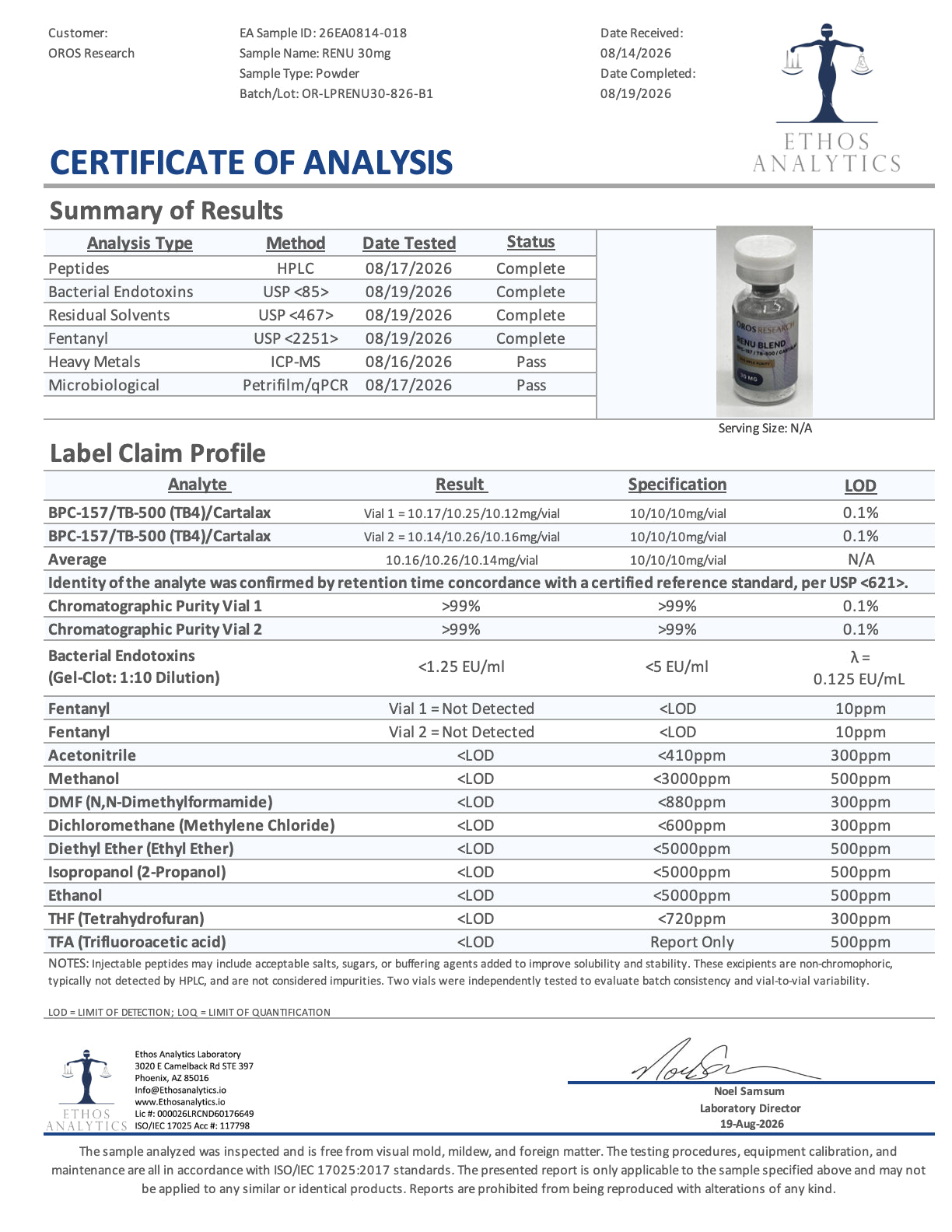
RENU is a three-component peptide research blend containing 10mg BPC-157, 10mg Cartalax, and 10mg TB-500 (Thymosin Beta-4). Together, the individually listed components provide 30mg total specified research material in a 3mL vial.
Each component has separately supplied molecular information, allowing researchers to document the complete formulation as well as its individual constituents.
RENU Peptide Research Blend Overview
The supplied formulation contains three independently specified research materials:
| Specification | BPC-157 | Cartalax | TB-500 |
|---|---|---|---|
| Quantity | 10mg | 10mg | 10mg |
| Molecular Formula | C62H98N16O22 | C12H19N3O8 | C212H350N56O78S |
| Molecular Weight | 1419.556 g/mol | 333.11721457 g/mol | 4963 g/mol |
| PubChem CID | 9941957 | 87815447 | 16132341 |
| CAS Number | 137525-51-0 | N/A | 77591-33-4 |
Total Material: 30mg
Vial Size: 3mL
The quantities above describe the supplied material and do not establish a human dose, administration schedule, or experimental concentration.
BPC-157 10mg Specifications
The first component of RENU is BPC-157 10mg.
The supplied sequence is:
Gly-Glu-Pro-Pro-Pro-Gly-Lys-Pro-Ala-Asp-Asp-Ala-Gly-Leu-Val
Its molecular formula is:
C62H98N16O22
The supplied molecular weight is 1419.556 g/mol, PubChem CID is 9941957, and CAS number is 137525-51-0.
Researchers can examine records associated with the supplied formula using the PubChem molecular formula search for C62H98N16O22.
These characteristics provide multiple reference points for laboratory documentation and material identification.
Cartalax 10mg Specifications
The second component contains 10mg Cartalax.
Its supplied sequence is:
H-Ala-Glu-Asp-OH
The molecular formula is:
C12H19N3O8
The supplied molecular weight is 333.11721457 g/mol, while the provided PubChem CID is 87815447.
No CAS number was supplied for this component, so one is not being inferred.
Researchers can investigate records associated with the supplied formula through the PubChem molecular formula search for C12H19N3O8.
TB-500 10mg Specifications
The third component contains 10mg TB-500 (Thymosin Beta-4).
The supplied sequence is:
Ac-Ser-Asp-Lys-Pro-Asp-Met-Ala-Glu-Ile-Glu-Lys-Phe-Asp-Lys-Ser-Lys-Leu-Lys-Lys-Thr-Glu-Thr-Gln-Glu-Lys-Asn-Pro-Leu-Pro-Ser-Lys-Glu-Thr-Ile-Glu-Gln-Glu-Lys-Gln-Ala-Gly-Glu-Ser-OH
Its molecular formula is:
C212H350N56O78S
The supplied molecular weight is 4963 g/mol, PubChem CID is 16132341, and CAS number is 77591-33-4.
Researchers can examine records associated with the formula through the PubChem molecular formula search for C212H350N56O78S.
RENU 30mg Three-Component Research Formulation
The RENU formulation contains equal listed quantities of its three research components:
BPC-157: 10mg
Cartalax: 10mg
TB-500: 10mg
Together, these quantities provide 30mg total specified material.
The complete combination should be distinguished from any research investigating BPC-157, Cartalax, or TB-500 independently. Findings involving an individual component should not automatically be generalized to the three-component formulation.
Cartalax Research Identification
The supplied Cartalax component can be identified using several provided molecular characteristics.
These include the sequence H-Ala-Glu-Asp-OH, formula C12H19N3O8, molecular weight 333.11721457 g/mol, and PubChem CID 87815447.
These specifications provide more precise research documentation than the product name alone.
When comparing the Cartalax component with external literature or database records, researchers should verify that the investigated material corresponds to the specifications supplied for this product.
Cartalax Peptide Protocol Search Intent
The phrase cartalax peptide protocol appears in the supplied keyword research.
For this product page, protocol-related terminology refers only to controlled research methodology. No human administration protocol, dosage schedule, treatment plan, or self-use instructions are provided.
Laboratory protocols may vary according to factors such as:
- Research model
- Experimental objective
- Material concentration
- Controls
- Analytical methodology
- Exposure conditions
- Observation period
- Measured endpoints
These variables should be established within the specific experimental design rather than treated as a universal protocol.
Cartalax Peptide Side Effects and Research Safety
Searches for cartalax peptide side effects reflect interest in safety-related information.
The supplied product specifications do not provide clinical adverse-effect data, so this page does not infer or invent human side effects.
For laboratory research, investigators should instead evaluate available evidence according to the exact material, model, concentration, methodology, and conditions being studied.
Safety findings from one experimental context should not automatically be generalized to another.
Buy Cartalax USA Search Context
The phrase buy cartalax usa represents research procurement intent in the supplied keyword data.
Within this product page, Cartalax is discussed strictly as a component of a laboratory research formulation. Procurement decisions should consider accurate product identification, documented specifications, appropriate research-use labeling, and relevant laboratory requirements.
This keyword does not imply or recommend personal, therapeutic, or clinical use.
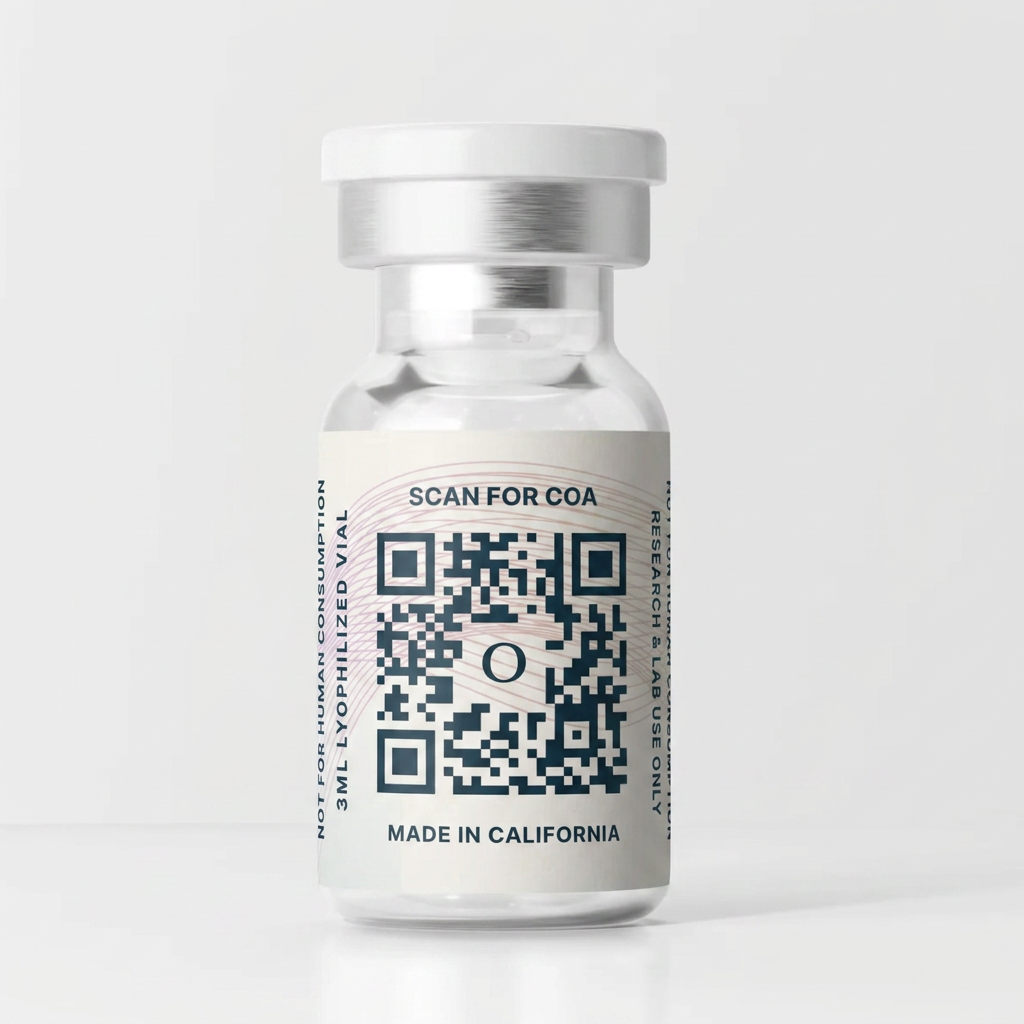
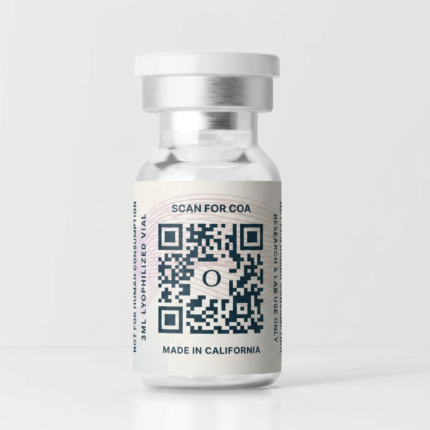
3mL Research Vial
The complete RENU blend is supplied in a 3mL vial.
The vial capacity is a physical product specification and does not establish experimental concentration, final preparation volume, or administration quantity.
No solvent, reconstitution procedure, storage condition, or experimental concentration was included in the supplied product information.
Those details are therefore not being inferred.
Laboratory Research Considerations
Research involving a multi-component formulation requires clear documentation of both the complete product and its individual constituents.
Relevant variables may include:
- Identity of all three components
- Individual material quantities
- Molecular characteristics
- Experimental concentration
- Research model
- Appropriate controls
- Exposure conditions
- Analytical methodology
- Experimental endpoints
- Observation period
- Reproducibility
Researchers should distinguish observations involving the complete blend from findings involving an individual component.
Research Documentation
Laboratory records for RENU can include:
BPC-157: 10mg
Cartalax: 10mg
TB-500 (Thymosin Beta-4): 10mg
Total Material: 30mg
Vial Capacity: 3mL
Researchers can additionally document the supplied sequence, formula, molecular weight, PubChem identifier, and available CAS number for each constituent.
Experiment-specific records may include research concentration, model, controls, methodology, exposure conditions, analytical procedures, and measured endpoints.
Evaluating Scientific Literature
When comparing the formulation with published research, investigators should determine whether a study evaluates an individual material or a combination system.
Important comparison factors include:
- Exact molecular identity
- Number of components
- Material quantities
- Experimental concentration
- Research model
- Study design
- Controls
- Analytical methodology
- Exposure conditions
- Measured endpoints
Research involving BPC-157, Cartalax, or TB-500 individually should not automatically be interpreted as evidence concerning the complete three-component formulation.
Related OROS Research Materials
Researchers can review ARA-290 Buffered 32mg as a separately specified research material.
Another multi-component option is AURA – GHK-Cu / Epithalon / Snap-8 / KPV.
Researchers can also explore BPC-157 5mg and BPC-157 10mg as individually specified BPC-157 research products.
Each material has separate specifications and should be evaluated independently.
Scientific Research Resources
Researchers can use PubChem to investigate molecular records and available chemical identifiers.
Peer-reviewed biomedical and experimental publications can be searched through PubMed.
The exact molecular material, formulation, experimental model, methodology, controls, concentration, and endpoints should be verified before comparing findings across studies.
Research FAQ
What is RENU?
RENU is the product designation used here for a three-component research blend containing BPC-157 10mg, Cartalax 10mg, and TB-500 10mg.
How much total research material is supplied?
The three individually listed 10mg components provide 30mg total specified material.
What is the Cartalax sequence?
The supplied sequence is H-Ala-Glu-Asp-OH.
What is the Cartalax PubChem CID?
The supplied PubChem CID is 87815447.
What is the BPC-157 PubChem CID?
The supplied BPC-157 identifier is 9941957.
What is the TB-500 PubChem CID?
The supplied TB-500 identifier is 16132341.
What size vial is supplied?
The complete formulation is supplied in a 3mL vial.
Does this page provide a Cartalax dosing or administration protocol?
No. Protocol terminology on this page concerns controlled laboratory methodology only. No human dosing, injection, administration, or treatment protocol is provided.
Research Use Disclaimer
This RENU BPC-157 / Cartalax / TB-500 formulation is presented exclusively for controlled laboratory investigation, analytical evaluation, and applicable in-vitro research. Material quantities and vial capacity are research specifications and do not constitute human dosing or administration guidance. This information does not provide instructions for injection, self-administration, therapeutic use, diagnosis, treatment, athletic performance enhancement, bodybuilding, or veterinary application.
| Net Weight |
30mg |
|---|---|
| Brand |
OROS Research |
| Format |
Lyophilized Vial |
Related products


Reviews
There are no reviews yet.