
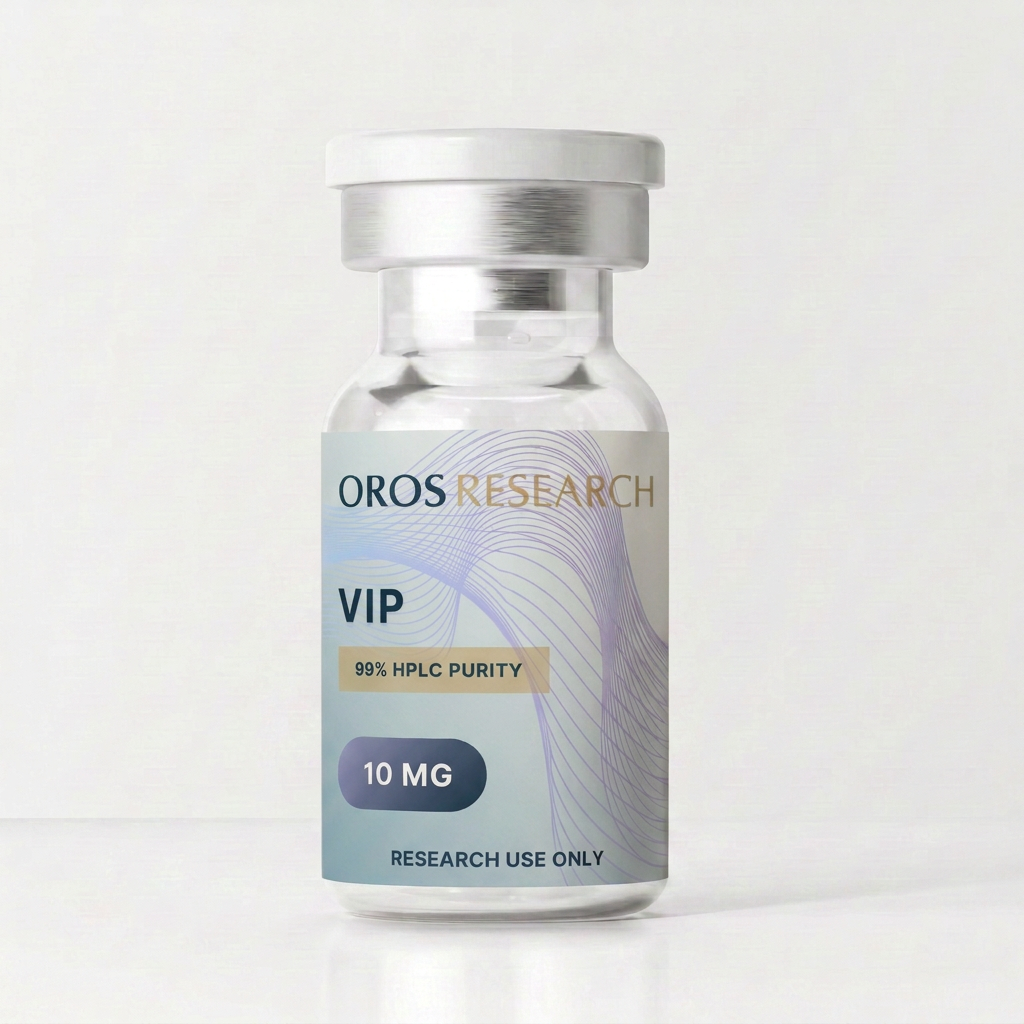

VIP 10mg
$54.99
- Compound: VIP (Vasoactive Intestinal Peptide)
- Research material: VIP peptide
- Sequence: H-His-Ser-Asp-Ala-Val-Phe-Thr-Asp-Asn-Tyr-Thr-Arg-Leu-Arg-Lys-Gln-Met-Ala-Val-Lys-Lys-Tyr-Leu-Asn-Ser-Ile-Leu-Asn-NH₂
- Molecular Formula: C₁₄₇H₂₃₈N₄₄O₄₂S
- Molecular Weight: 3325 g/mol
- CAS Number: 40077-57-4
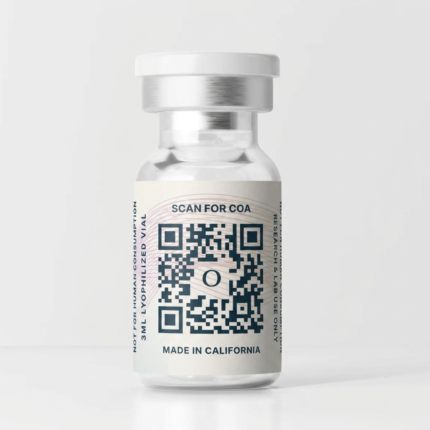
- Vial Size: 3 mL
- Supplied strictly as a research material for controlled laboratory and in-vitro investigation; not for human or animal use.
VIP Peptide – Vasoactive Intestinal Peptide for Laboratory Research
VIP peptide, commonly known as vasoactive intestinal peptide (VIP), is a 28-amino-acid signaling peptide investigated extensively in biochemical, molecular, receptor-signaling, and cellular research. VIP belongs to a broader family of structurally related signaling peptides and is particularly relevant to studies involving VPAC receptor systems and downstream cellular signaling.
OROS Research supplies this material in a 3 mL vial for qualified laboratory experimentation. Researchers may use the material in appropriately designed experimental models investigating peptide-receptor interactions, molecular signaling, analytical characteristics, and other scientifically relevant properties.
Published research has examined VIP interactions with the VPAC1 and VPAC2 receptor subtypes and the resulting effects on cellular signaling pathways. These observations provide a foundation for continued experimental investigation of VIP without implying clinical efficacy or suitability for personal use.
VIP Peptide Research Overview
The VIP peptide is an established subject of peptide-signaling research. Scientific literature identifies vasoactive intestinal peptide VIP as a 28-amino-acid peptide, and experimental studies have examined its interaction with G-protein-coupled receptor systems, particularly VPAC1 and VPAC2.
Researchers studying the broader scientific literature can consult the PubMed biomedical research database for peer-reviewed publications concerning VIP, its receptors, peptide analogs, signaling mechanisms, and experimental models.
At the molecular level, VIP research provides opportunities to investigate ligand-receptor recognition, peptide structure-function relationships, receptor subtype activity, and downstream signaling. These areas make VIP relevant to controlled laboratory investigations involving peptide biology and receptor pharmacology.
The supplied sequence can also be referenced through the provided PubChem compound record, while researchers seeking broader chemical database resources may consult PubChem for available compound and substance records.
Research Mechanism and Scientific Context
VPAC Receptor Research
A major focus of vip peptide research is its interaction with VPAC receptors. Experimental literature has identified VPAC1 and VPAC2 as important receptor subtypes associated with VIP signaling.
Studies using recombinant receptors, cultured cells, binding experiments, and peptide analogs have investigated how individual residues within VIP influence receptor interaction and signaling. This makes the peptide useful in experimental settings focused on receptor binding, structure-activity relationships, and comparative peptide research.
Cellular Signaling Research
VIP receptor systems have also been studied in relation to intracellular signaling. Experimental work examining VIP and related analogs has used measurements such as adenylyl cyclase activity and cellular cAMP responses to characterize receptor activation.
Accordingly, vip peptides remain relevant research materials for controlled cellular models examining peptide-mediated signal transduction and receptor-dependent biochemical responses.
Laboratory Research Applications
The vip peptide may be investigated across several qualified laboratory research settings. Appropriate areas of experimental study may include:
- VPAC1 and VPAC2 receptor interaction studies
- Peptide-receptor binding research
- Cellular signaling assays
- Structure-activity relationship investigations
- Comparative peptide and peptide-analog research
- Molecular pathway studies
- Analytical characterization
- Experimental peptide stability research
- Controlled in-vitro receptor models
Researchers comparing peptide materials for experimental projects may also examine TB-500 (TB4) 10mg or the lower-quantity TB-500 (TB4) 5mg as separate research compounds.
For research involving a different peptide and signaling context, Tesamorelin 10mg is another OROS Research material available for laboratory investigation.
These compounds are distinct research materials and should not be interpreted as biologically equivalent to peptide VIP.
Product Specifications
| Specification | Product Information |
|---|---|
| Compound | VIP |
| Full Name | Vasoactive Intestinal Peptide |
| Sequence | H-His-Ser-Asp-Ala-Val-Phe-Thr-Asp-Asn-Tyr-Thr-Arg-Leu-Arg-Lys-Gln-Met-Ala-Val-Lys-Lys-Tyr-Leu-Asn-Ser-Ile-Leu-Asn-NH₂ |
| Molecular Formula | C₁₄₇H₂₃₈N₄₄O₄₂S |
| Molecular Weight | 3325 g/mol |
| CAS Number | 40077-57-4 |
| PubChem SID | 16140438 |
| Vial Size | 3 mL |
| Research Classification | Peptide research material |
| Intended Use | Laboratory and in-vitro research only |
VIP Peptide Benefits in Research Context
The phrase vip peptide benefits should be interpreted strictly within an experimental research context rather than as a statement of benefits for human use. From a laboratory perspective, VIP provides researchers with an established peptide system for investigating receptor pharmacology, molecular signaling, peptide structure-activity relationships, and VPAC receptor biology.
Published experimental studies have also investigated modified VIP analogs to determine how changes to particular amino-acid residues influence VPAC1 and VPAC2 receptor interaction. Such studies help researchers characterize the molecular features involved in peptide-receptor recognition.
No human-use, therapeutic, diagnostic, or performance benefit is implied by the availability of this research compound.
VIP Peptide FAQ
What is a VIP peptide?
VIP peptide refers to vasoactive intestinal peptide, a 28-amino-acid signaling peptide studied in molecular and cellular research. It has been investigated extensively in relation to VPAC1 and VPAC2 receptors, receptor-binding behavior, signaling pathways, and structure-activity relationships.
What is vip vasoactive intestinal peptide studied for?
Vip vasoactive intestinal peptide is studied across several areas of experimental biology, including peptide-receptor interactions, VPAC receptor signaling, intracellular signaling responses, structure-function relationships, and comparative evaluation of VIP analogs. These investigations may involve biochemical assays, cultured cells, recombinant receptor systems, and other controlled experimental models.
What is the difference between VIP and vasoactive intestinal peptide VIP?
They refer to the same peptide terminology in this product context. VIP is the standard abbreviation for vasoactive intestinal peptide. Scientific publications frequently use the abbreviated name after introducing the complete peptide name.
What form of VIP does OROS Research supply?
This OROS Research product is supplied as VIP in a 3 mL vial. The supplied product specifications list a molecular formula of C₁₄₇H₂₃₈N₄₄O₄₂S and a molecular weight of 3325 g/mol.
What is the supplied sequence?
The supplied sequence is H-His-Ser-Asp-Ala-Val-Phe-Thr-Asp-Asn-Tyr-Thr-Arg-Leu-Arg-Lys-Gln-Met-Ala-Val-Lys-Lys-Tyr-Leu-Asn-Ser-Ile-Leu-Asn-NH₂. Researchers may use this sequence information when evaluating the compound in appropriately designed analytical or experimental work.
Is vip peptide dosage information provided?
No. The search phrase vip peptide dosage may appear in online searches, but this product is not offered for personal, clinical, or veterinary use. OROS Research therefore does not provide human dosage, administration, injection, or treatment instructions. Experimental parameters should be determined by qualified researchers according to their validated laboratory protocols.
Is this product intended for human use?
No. This research material is supplied exclusively for laboratory and in-vitro investigation. It is not intended for human or animal consumption, administration, therapeutic use, diagnosis, or any other personal application.
Research Use Disclaimer
This vip peptide product is supplied strictly for qualified laboratory research, analytical evaluation, and in-vitro experimentation. It is not intended for human or animal consumption, clinical application, therapeutic use, diagnosis, self-administration, or veterinary use. Experimental handling and evaluation should be conducted by appropriately qualified research professionals within a suitable laboratory environment.
Related products




Reviews
There are no reviews yet.